

A 10,500-Student Mega-Campus
WHAT ADVTECH’S EXPANSION SIGNALS FOR THE FUTURE OF HIGHER EDUCATION IN SOUTH AFRICA
South Africa’s higher-education landscape is undergoing a quiet but profound transformation. One of the clearest signs of this shift came recently with the announcement that ADvTECH will build a 10,500-student mega-campus in Umhlanga, KwaZulu-Natal, further expanding the country’s private higher-education capacity.
While the news may appear to be simply another property development, it actually reflects several important trends shaping the future of education, skills development, and employability in South Africa.

A MAJOR INVESTMENT IN HIGHER EDUCATION CAPACITY

The planned campus will be built on 10 hectares of land alongside the N2 highway in Umhlanga and will ultimately accommodate 10,500 students once fully completed.
Construction is expected to begin in 2027, with the first phase opening in 2029 and providing capacity for about 8,000 students, including a 500-bed student residence.
A second phase, expected by 2035, will expand the campus to full capacity and add an additional 500 residence beds, bringing on-site accommodation to approximately 1,000 beds.
This development follows the opening of two other large tertiary campuses earlier in 2026:
-
The Emeris/Vega Sandton mega-campus in Johannesburg
-
The Emeris Nelson Mandela Bay campus in Gqeberha
Taken together, these projects demonstrate an accelerating expansion of private higher education across South Africa’s major economic regions.
WHY PRIVATE HIGHER EDUCATION IS EXPANDING
The underlying driver is simple: demand for higher education in South Africa continues to exceed supply.
Each year, thousands of qualified students are unable to secure places at public universities due to limited capacity. At the same time, the country faces persistently high youth unemployment, making skills development and employability more urgent than ever.
Private higher-education providers have increasingly stepped into this gap.
Large education groups such as ADvTECH are scaling rapidly to meet demand for career-aligned qualifications, industry-relevant programmes, and flexible learning pathways.
Recent policy developments are also accelerating this shift. New regulatory frameworks now allow private higher-education institutions to apply for full university status, which could further reshape the sector in the coming decade.
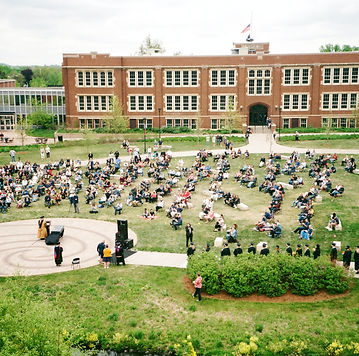
THE RISE OF THE “MEGA-CAMPUS” MODEL

Another notable trend is the emergence of the mega-campus model.
Rather than operating many small campuses, private providers are consolidating their offerings into large, integrated academic hubs that bring multiple faculties and brands under one roof.
These mega-campuses typically include:
• Technology-enabled lecture theatres
• Innovation labs and collaborative learning spaces
• Career development and student support services
• On-site residences and student life facilities
This model reflects a broader shift toward holistic student development, where academic learning is combined with career preparation, mentorship, and employability support.
WHAT THIS MEANS FOR STUDENTS
For students, developments like this represent expanded access to higher education and new pathways into the labour market.
Large private campuses often focus on programmes aligned with high-demand sectors such as:
• Business and entrepreneurship
• Information technology and data science
• Creative industries
• Supply chain and logistics
• Hospitality and service industries
These programmes increasingly integrate industry partnerships, internships, and practical learning, helping graduates transition more smoothly from education into employment.

WHY THIS MATTERS FOR SOUTH AFRICA’S SKILLS PIPELINE

South Africa’s long-term economic growth depends heavily on its ability to develop talent at scale.
Investments in new campuses, learning technologies, and career-aligned programmes signal growing recognition that higher education must evolve to meet the demands of a changing economy.
However, access alone is not enough.
Ensuring student success requires:
• Financial access and funding mechanisms
• Academic support and tutoring
• Mentorship and career guidance
• Data-driven student success monitoring
In other words, expanding seats in classrooms must go hand-in-hand with expanding the support systems that help students graduate and thrive in the workforce.
THE BIGGER PICTURE
The announcement of the Umhlanga mega-campus reflects a broader transformation underway in South Africa’s education system. Private education providers are scaling rapidly.
New institutional models are emerging.
For students, employers, and policymakers alike, the key question is no longer simply how many students can enter higher education. The real question is: How do we ensure that those students graduate with the skills, support, and opportunities needed to succeed in the modern economy?
As South Africa continues to grapple with youth unemployment and a rapidly evolving labour market, developments like this highlight both the opportunities and the responsibilities facing the country’s higher-education ecosystem.
